
You've probably heard about Ballycotton's cliff walk. It's become something of a hidden gem for people who want proper coastal views without the scrambling or heavy hiking. Thing is, there's more to it than just "nice scenery" — the path itself is genuinely well-designed for older walkers, with manageable grades and rest points that actually make sense.
The walk covers roughly 2.5 kilometres of coastline, taking between 45 minutes and 90 minutes depending on how often you stop for photos or just to sit and watch the water. We've walked it multiple times now, and each visit reveals something different — sometimes it's the light hitting the cliffs at a particular angle, other times it's the way the Atlantic moves against the rocks.
Starting Out: The Harbour Approach
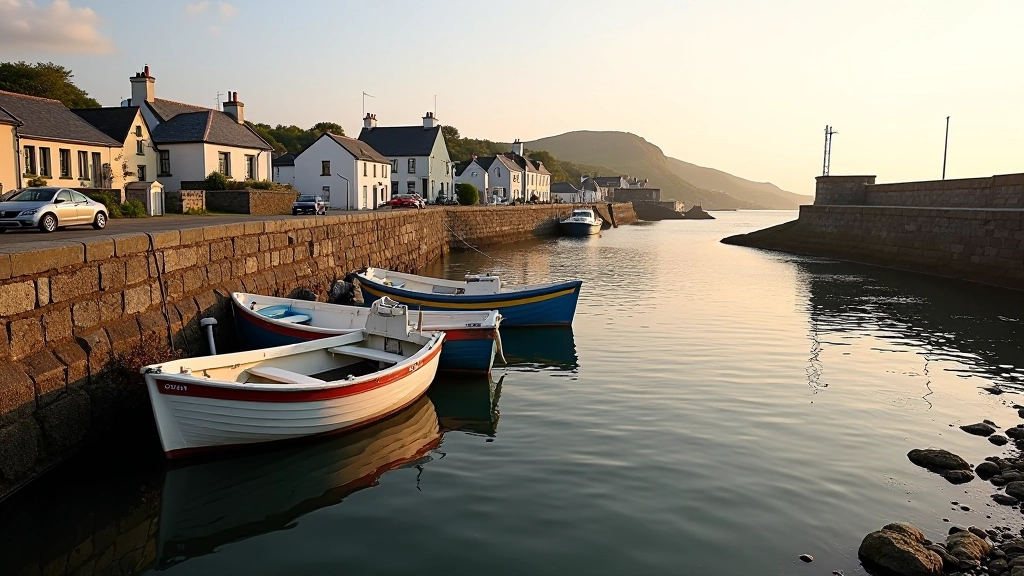
Most people begin at Ballycotton Harbour, which makes sense. The car park is right there, facilities are nearby, and you're immediately surrounded by the working village atmosphere. From the harbour, you'll follow the coastal path — it's clearly marked, and there's no real confusion about which way to go.
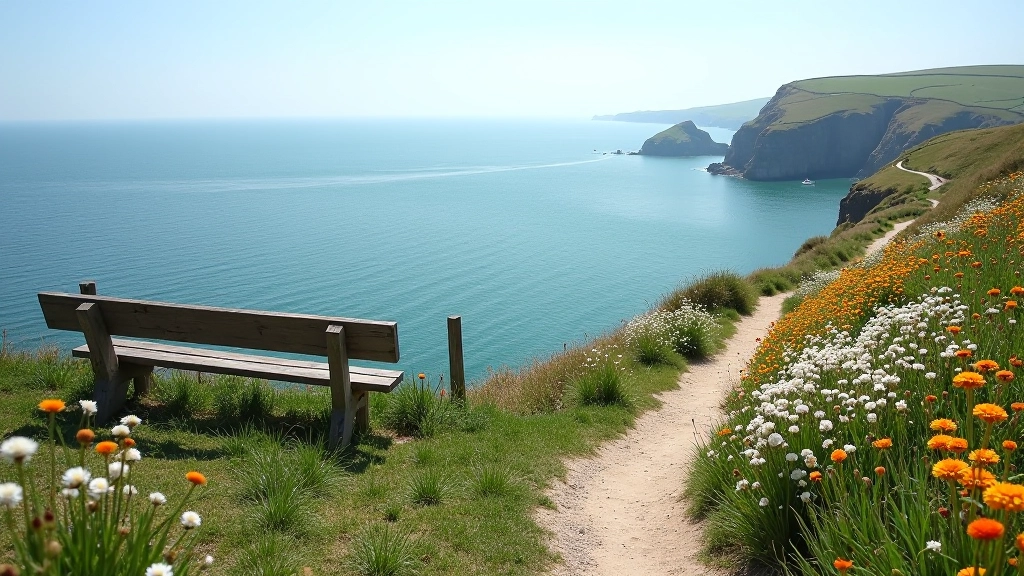
The first section climbs gradually for about 15 minutes. It's not steep, but there is elevation gain. The path widens considerably here, and you've got solid ground underfoot. Safety railings appear once you're higher up, which is reassuring. Plus, there are benches positioned at natural viewpoint spots, so you're not forced to walk without breaks if you need them.
What we like about this opening stretch is how it builds. You're not thrown into dramatic cliffs immediately. Instead, you get accustomed to the coastal environment, watch the village recede behind you, and gradually understand the scale of what you're about to see.
Pro tip: Start early if you can. The light's better in morning hours, and you'll have the path mostly to yourself before lunchtime crowds arrive.
The Main Cliff Section: Where the Views Truly Open
Once you're about 20 minutes in, the path opens onto the proper cliff edge. This is where you understand why people talk about Ballycotton. The cliffs drop roughly 60-70 metres to the water, and the visibility on a clear day extends for kilometres in both directions. You can see Hook Peninsula to the west, and on exceptional days, the Dunmore cliffs across the water.
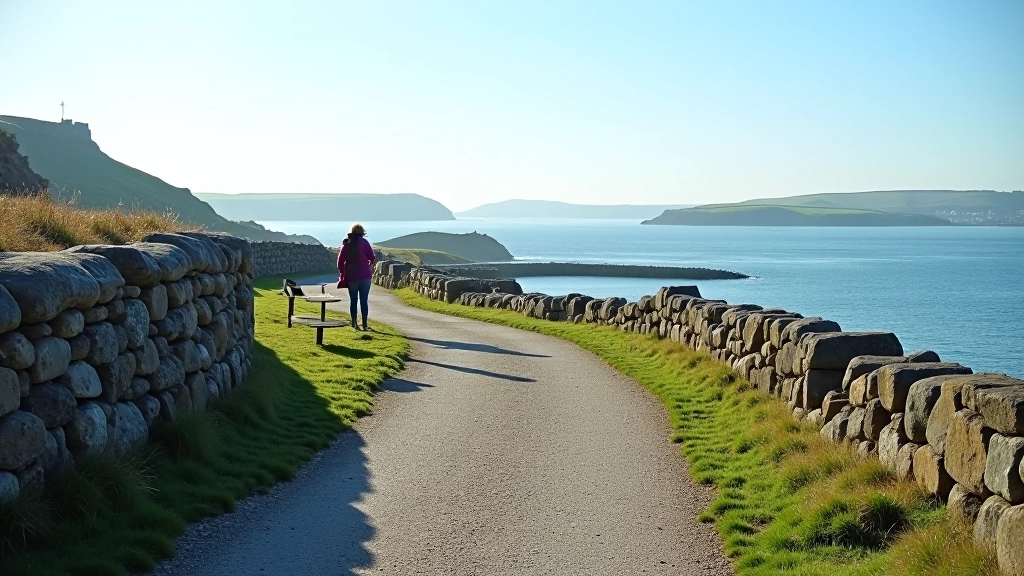
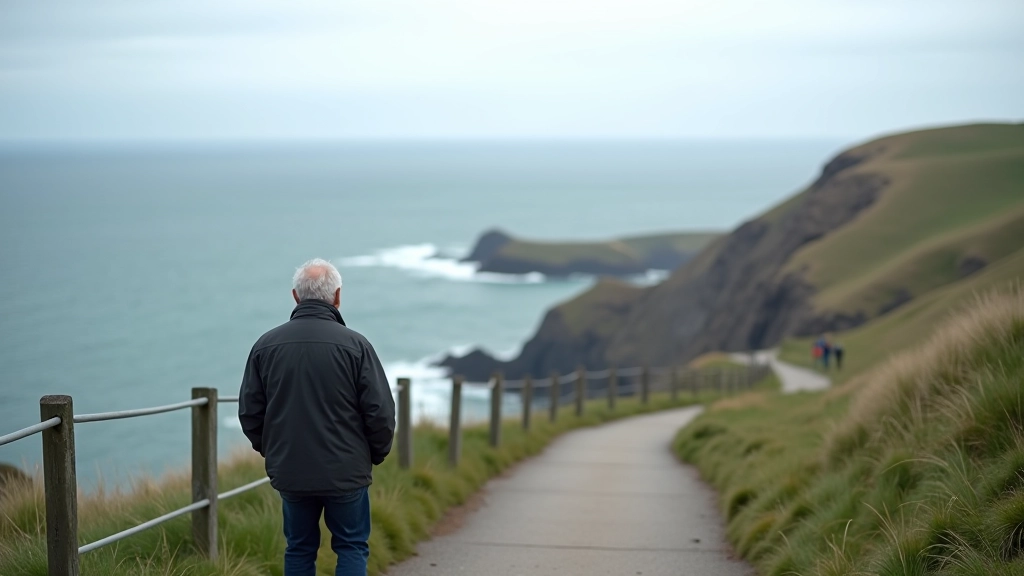
The path here is wide — probably 2 to 3 metres in most sections — and the railing is substantial. It's not scary, honestly. The engineering is solid, and the walkway doesn't feel precarious. What you do feel is genuinely exposed to the elements. The wind can be stronger up here, which is worth knowing if you've got mobility concerns. On blustery days, you might want to hold the railing.
Photography opportunities are everywhere. We've seen people with serious camera gear, but honestly, any phone camera captures the drama here. The light changes constantly — shadows move across the water, cloud formations shift, the ocean colour transforms from grey to green to deep blue depending on conditions.
This article provides informational guidance about the Ballycotton Cliff Walk for general knowledge purposes. Weather conditions, path maintenance, and local circumstances can change. Always check current conditions before visiting, wear appropriate footwear, and take standard coastal safety precautions. If you have mobility concerns or health conditions, consult with your healthcare provider before undertaking any coastal walk.
The Second Half: Varied Terrain and Hidden Viewpoints
About halfway through, the character of the walk shifts slightly. You're still on the cliff edge, but the path becomes less uniform. There are sections where it dips inland slightly, giving you respite from the wind. You'll notice wildflowers here — depending on season, you might see thrift, bird's-foot trefoil, or sea pinks. In late spring and early summer, it's genuinely colourful.
There's a distinctive rocky outcrop about three-quarters of the way along where the path widens into an almost natural amphitheatre. Locals call it "the viewpoint" even though the entire walk is viewpoints. It's worth pausing here. The geology becomes visible in the layered rock faces — you're looking at Devonian period sandstone and shale, which tells you something about how ancient this landscape is.
The final stretch loops back toward Ballycotton, and you'll notice the village reappearing below. The path becomes slightly less dramatic here, but that's not a bad thing. It gives you time to process what you've seen and prepare for the return to normal terrain.

Practical Guidance for the Walk
- Footwear matters: Trainers or proper hiking shoes with good grip. The path's solid, but it can be slippery when wet. Don't underestimate moisture — sea spray and coastal mist can make stone slick.
- Bring layers: Weather changes fast on the coast. What starts as pleasant can become cold and windy within minutes. We're talking three to four layers, even in summer.
- Water and snacks: There's nowhere to buy anything once you've left the harbour. Bring your own water and something to eat if you plan to sit and rest.
- Timing: Allow 90 minutes minimum if you want to walk comfortably without rushing. More if you're photographing or you're moving slowly.
- Weather check: High winds or storms make this walk unpleasant and genuinely risky. Check forecasts before you go.
Why This Walk Works for Walkers of Different Abilities
We've watched people of various ages and fitness levels enjoy this walk. What makes it accessible isn't that it's flat or trivial — it's that you can control your pace entirely. There's no competitive element. Nobody's rushing you. If you need to stop every 5 minutes and sit on one of the benches, that's completely fine. The walk doesn't judge you.
The railing presence is genuinely reassuring for people worried about balance or stability. And the path width means you're not in any danger of stepping off accidentally. You'd have to actively climb over the railing to come into genuine risk, which isn't going to happen to someone walking carefully.
Some walkers do the full route and return. Others walk out to the halfway point and come back. A few head right through to the village side and sit in one of the cafés afterwards. None of these are "wrong" ways to experience it. You're building your own version of the walk.
The Real Value of the Ballycotton Cliff Walk
What strikes us most about this walk is how it delivers exactly what it promises — stunning views without unnecessary difficulty. You're not hiking into remote wilderness. You're not dealing with scrambling or technical terrain. You're walking along a well-maintained coastal path that happens to be genuinely spectacular.
For people in the later stages of life, that's valuable. It's the difference between thinking "I can't do proper coastal walking anymore" and realizing "Actually, I can, just at my own pace." And that shift in perspective — that's worth more than any photograph you'll take, though you'll probably end up with some excellent photos anyway.
If you're planning to visit Ballycotton, this walk should be on your list. Not as a challenge to conquer, but as something to savour. The views aren't going anywhere. Neither are you. Take your time with it.